A professional website has become one of the most valuable business assets in today’s digital economy. Whether you own a startup, ecommerce brand, manufacturing company, healthcare clinic, educational institution, restaurant, real estate agency, or corporate enterprise, your website often creates the first impression of your business.
Customers no longer judge businesses only by their products or services. They also evaluate website speed, design quality, mobile usability, trust signals, online reviews, and the overall digital experience before making a purchase or enquiry.
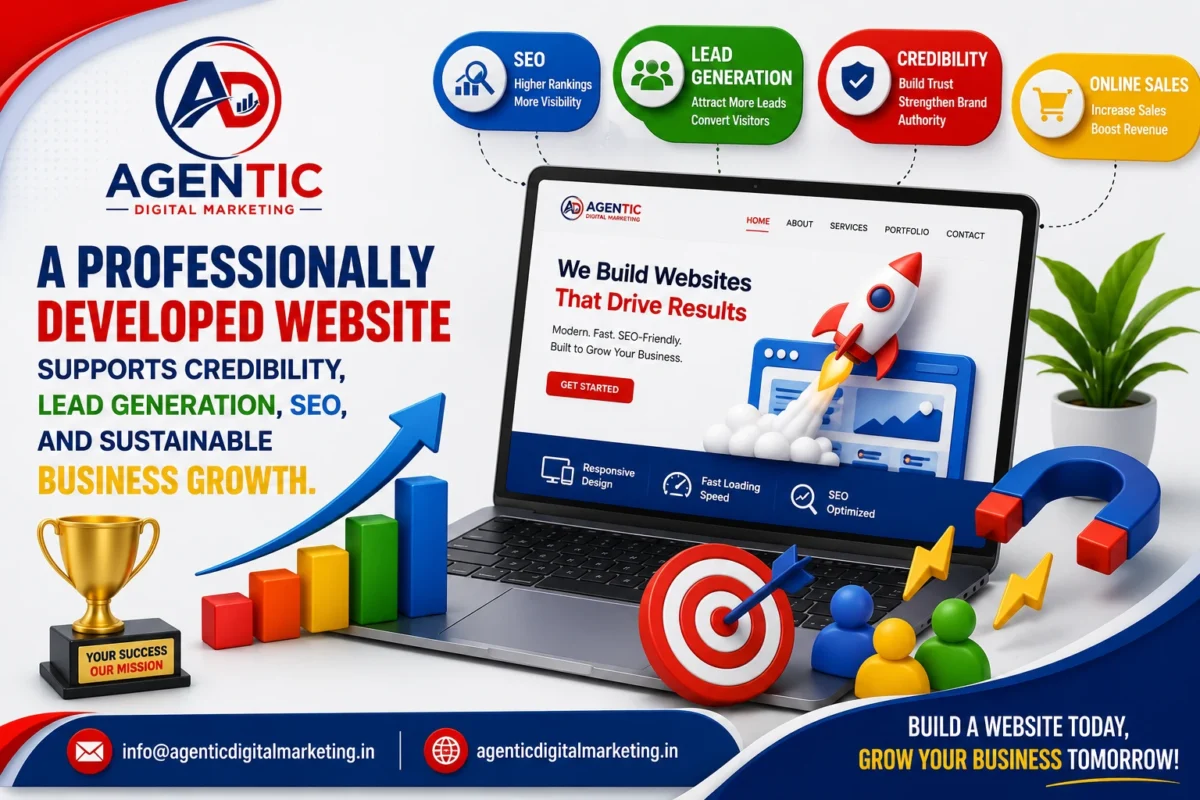
A professionally developed website does much more than display information. It helps businesses:
- Build credibility
- Generate qualified leads
- Improve search engine rankings
- Increase online sales
- Strengthen brand authority
- Automate customer engagement
- Support long-term business growth
Modern businesses also need websites that are built with search engines and artificial intelligence in mind. AI-powered search experiences, Google AI Overviews, voice search, structured data, Core Web Vitals, and user experience now play a significant role in determining online visibility.
Businesses looking for scalable, future-ready solutions often partner with a Website Development Company that combines technical expertise with SEO, UI/UX design, and conversion optimisation. If you’re planning to build a website that attracts more visitors and converts them into customers, explore our Website Development Services:
https://agenticdigitalmarketing.in/services/website-development-company/
What Is a Website Development Company?
Quick Answer (Featured Snippet):
A website development company is a professional agency that designs, develops, optimises, launches, and maintains websites for businesses. It combines web design, programming, SEO, security, performance optimisation, and user experience to create websites that generate leads, sales, and long-term business growth.
Key Takeaway
A great website development company doesn’t simply build websites—it creates digital assets that support marketing, branding, customer acquisition, and business growth.
At a Glance
- Creates professional business websites
- Develops ecommerce platforms
- Builds responsive mobile-friendly websites
- Optimises websites for SEO
- Improves website speed and Core Web Vitals
- Integrates AI-powered features
- Provides long-term maintenance and support
A modern website is no longer an online brochure. It serves as a digital sales representative, customer support centre, marketing platform, and lead generation engine available 24 hours a day.
Professional website development companies work closely with clients to understand business objectives before recommending the right technology stack, website architecture, and marketing strategy.
Instead of focusing only on appearance, experienced developers ensure the website performs well in search engines, loads quickly across devices, protects customer data, and provides a seamless browsing experience.
🚀 Ready to Grow Your Business Online?
Agentic Digital Marketing Agency helps businesses with SEO, Google Ads, Meta Ads, Website Development, Local SEO and Lead Generation.
Core Responsibilities of a Website Development Company
Professional website development agencies typically provide end-to-end services covering every stage of the website lifecycle.
Business Consultation
The project begins with understanding:
- Business goals
- Target audience
- Competitors
- Customer journey
- Marketing objectives
- Conversion goals
This discovery phase helps create a website that aligns with measurable business outcomes.
UI Design & UX Design
Designers create interfaces that are visually appealing while ensuring users can navigate the website easily.
Key objectives include:
- Clear navigation
- Consistent branding
- User-friendly layouts
- Strong call-to-action placement
- Accessibility
- Mobile responsiveness
Excellent user experience encourages visitors to stay longer and complete desired actions.
Website Development
Developers convert approved designs into fully functional websites using modern technologies such as:
- HTML5
- CSS3
- JavaScript
- PHP
- React
- Node.js
- MySQL
Depending on project requirements, they may also use content management systems such as WordPress or ecommerce platforms like Shopify and WooCommerce.
Search Engine Optimisation
SEO is most effective when implemented during website development rather than after launch.
Technical SEO includes:
- Optimised URL structure
- Fast loading speed
- XML sitemap
- Robots.txt
- Structured Data
- Internal linking
- Mobile optimisation
- Clean code architecture
This foundation helps websites rank more effectively in Google Search.
Performance Optimisation
Visitors expect websites to load in just a few seconds.
Professional developers improve performance through:
- Image optimisation
- Browser caching
- Content Delivery Networks (CDNs)
- Code minification
- Lazy loading
- Database optimisation
These improvements support better user experience and stronger search visibility.
Security & Maintenance
Business websites require continuous monitoring.
Ongoing services often include:
- SSL certificate management
- Security updates
- Malware protection
- Backup systems
- Plugin updates
- Performance monitoring
- Bug fixes
Regular maintenance helps protect business continuity and customer trust.
Types of Websites Developed
Every industry has unique requirements, which is why professional website development companies build a wide range of websites.
Business Websites
Designed to showcase services, company information, case studies, testimonials, and contact details.
Ideal for:
- Consultants
- Agencies
- Manufacturers
- Healthcare providers
- Educational institutions
- Corporate businesses
Ecommerce Websites
Built to sell products online with features including:
- Shopping carts
- Secure payment gateways
- Inventory management
- Shipping integration
- Customer accounts
- Discount systems
Popular platforms include WooCommerce and Shopify.
Corporate Websites
Corporate websites often include:
- Investor information
- Careers
- Newsroom
- Service pages
- Branch locations
- Enterprise-level security
Landing Pages
Landing pages focus on a single conversion goal such as:
- Lead generation
- Webinar registrations
- Product launches
- Google Ads campaigns
- Meta Ads campaigns
Well-designed landing pages typically achieve higher conversion rates than general website pages.
Portfolio Websites
Ideal for:
- Architects
- Designers
- Photographers
- Freelancers
- Creative agencies
These websites highlight previous work while establishing credibility.
Educational Websites
Educational organisations often require:
- Online admissions
- Student portals
- Course management
- Learning management systems
- Faculty profiles
Custom Web Applications
Some businesses require advanced functionality beyond traditional websites.
Examples include:
- Customer portals
- Booking systems
- ERP integrations
- CRM dashboards
- Membership platforms
- Vendor management systems
Technologies Used
Professional website development companies choose technologies based on project requirements, scalability, and long-term maintenance.
| Technology | Purpose |
|---|---|
| HTML5 | Website structure |
| CSS3 | Visual styling and responsive layouts |
| JavaScript | Interactive functionality |
| PHP | Server-side development |
| WordPress | Content management system |
| Shopify | Ecommerce platform |
| WooCommerce | WordPress ecommerce solution |
| React | Modern frontend applications |
| Node.js | Backend application development |
| MySQL | Database management |
| Cloud Hosting | Reliable website hosting |
| CDN | Faster global content delivery |
| SSL Certificate | Secure encrypted communication |
| Google Analytics | Visitor insights |
| Google Search Console | SEO monitoring |
Selecting the right technology stack ensures the website remains secure, scalable, and easy to manage as the business grows.
Why Every Business Needs a Professional Website
Quick Answer (Featured Snippet):
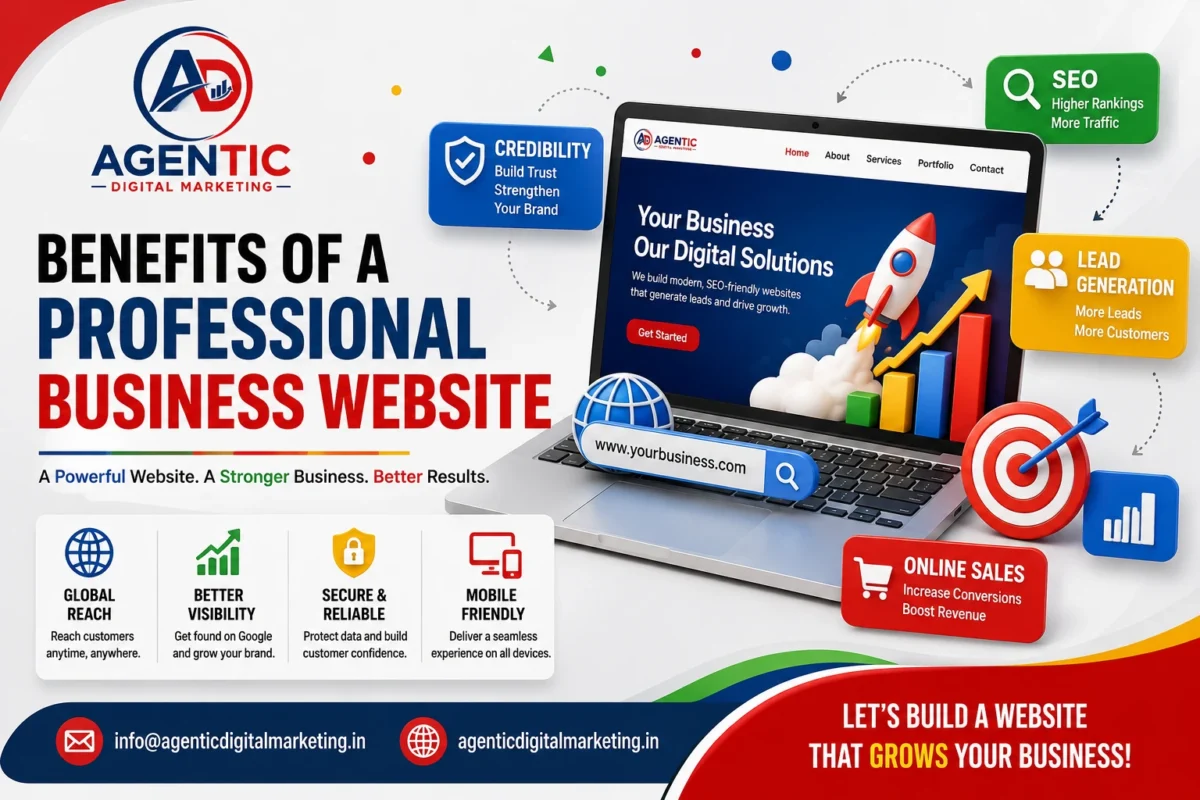
Every business needs a professional website because it builds credibility, attracts qualified customers, supports digital marketing, improves search visibility, generates leads, increases sales, and provides a central platform where customers can learn about products and services 24/7.
Key Takeaway
Your website is your digital headquarters. Unlike social media platforms, it is an asset that your business owns and controls, making it one of the most effective long-term investments for sustainable growth.
Benefits at a Glance
- Builds trust with potential customers
- Enhances brand visibility
- Supports SEO and AI search
- Generates high-quality leads
- Improves customer engagement
- Increases online sales
- Strengthens competitive advantage
Build Brand Credibility
Consumers often research businesses online before making purchasing decisions. A modern, professional website reassures visitors that your business is established, trustworthy, and committed to quality.
Essential trust elements include:
- Professional branding
- Customer testimonials
- Case studies
- Certifications
- Contact information
- Secure browsing
- Company history
Without a professional website, potential customers may choose competitors who present a stronger online presence.
Generate Qualified Leads
Your website can become one of your most effective lead generation channels.
Through strategically placed enquiry forms, downloadable resources, live chat, and persuasive calls-to-action, businesses can convert anonymous visitors into qualified prospects.
Lead generation improves further when the website is built with SEO-friendly architecture and targeted landing pages.
Businesses aiming to maximise online enquiries should consider investing in Business Website Development designed specifically to support marketing campaigns and conversion optimisation:
https://agenticdigitalmarketing.in/services/website-development-company/
Improve Customer Trust
Customers expect businesses to provide accurate and up-to-date information online.
A professional website helps answer common questions before prospects contact your team.
Typical information includes:
- Business hours
- Services
- Product information
- Pricing guidance
- Frequently asked questions
- Customer success stories
- Support resources
Providing this information improves transparency and builds confidence.
Increase Sales
An effective website supports revenue generation around the clock.
Whether selling products directly through ecommerce or generating enquiries for service-based businesses, a professionally developed website simplifies the buying journey and reduces friction.
Conversion-focused design elements include:
- Clear navigation
- Product filtering
- Simple checkout processes
- Persuasive copywriting
- Trust badges
- Fast-loading pages
- Mobile-friendly layouts
Businesses that prioritise user experience often achieve stronger conversion rates and higher customer satisfaction.
Grow Online Visibility
Search engines remain one of the most valuable sources of high-intent traffic.
A professionally developed website incorporates technical SEO best practices from the beginning, helping search engines understand, index, and rank content effectively.
Combined with quality content and ongoing digital marketing, a strong website becomes the foundation for long-term organic growth.
Website Development Services Explained
Quick Answer (Featured Snippet):
Website development services include planning, UI/UX design, coding, ecommerce development, CMS implementation, SEO optimisation, website redesign, landing page creation, security, maintenance, and ongoing performance improvements tailored to business objectives.
Key Takeaway
The best website development services combine strategy, design, technology, SEO, and conversion optimisation to create websites that not only look professional but also deliver measurable business results.
Service Overview
Professional website development agencies typically offer:
- Business website development
- Ecommerce website development
- Shopify website development
- WordPress website development
- Landing page design
- Custom website development
- Website redesign services
- Website maintenance and support
Businesses should choose services based on their goals, target audience, and future growth plans rather than selecting a one-size-fits-all solution.
Business Website Development
Business websites are designed to establish a strong online presence, showcase services, and generate enquiries. They typically include service pages, about sections, testimonials, blogs, contact forms, and clear calls to action. A well-structured business website also supports SEO, making it easier for potential customers to discover your company through search engines.
Ecommerce Website Development
Ecommerce websites enable businesses to sell products online with secure payment gateways, inventory management, product catalogues, customer accounts, shipping integrations, and promotional tools. Whether you’re launching a new online store or scaling an existing one, ecommerce development focuses on creating a seamless shopping experience that maximises conversions.
Shopify Website Development
Shopify is a popular ecommerce platform known for its ease of use and scalability. It is ideal for businesses seeking a hosted solution with built-in payment processing, app integrations, and streamlined store management. Shopify development includes custom theme design, app integration, performance optimisation, and conversion-focused storefronts.
WordPress Website Development
WordPress powers a significant portion of websites worldwide due to its flexibility and extensive ecosystem. From corporate websites to blogs and ecommerce stores with WooCommerce, WordPress development allows businesses to create highly customised, SEO-friendly websites that are easy to manage and expand over time.
Landing Page Design
Landing pages are purpose-built to support marketing campaigns by focusing visitors on a single objective, such as submitting an enquiry, downloading a resource, or making a purchase. Effective landing pages combine persuasive copy, intuitive design, and strong calls to action to improve conversion rates.
Custom Website Development
Some organisations require unique functionality beyond standard templates or CMS platforms. Custom website development addresses these needs by building tailored solutions such as booking systems, customer portals, CRM integrations, membership platforms, or enterprise applications designed specifically around business processes.
Website Redesign Services
As businesses evolve, their websites may no longer reflect their brand, support modern SEO practices, or meet user expectations. Website redesign services improve visual appeal, enhance user experience, optimise performance, strengthen security, and align the website with current business goals.
Essential Features of a Modern Website
Quick Answer (Featured Snippet):
A modern website should be fast, mobile-friendly, secure, SEO-optimised, user-focused, and conversion-driven. It must deliver an excellent user experience across all devices while meeting Google’s performance standards and supporting future business growth.
Key Takeaway
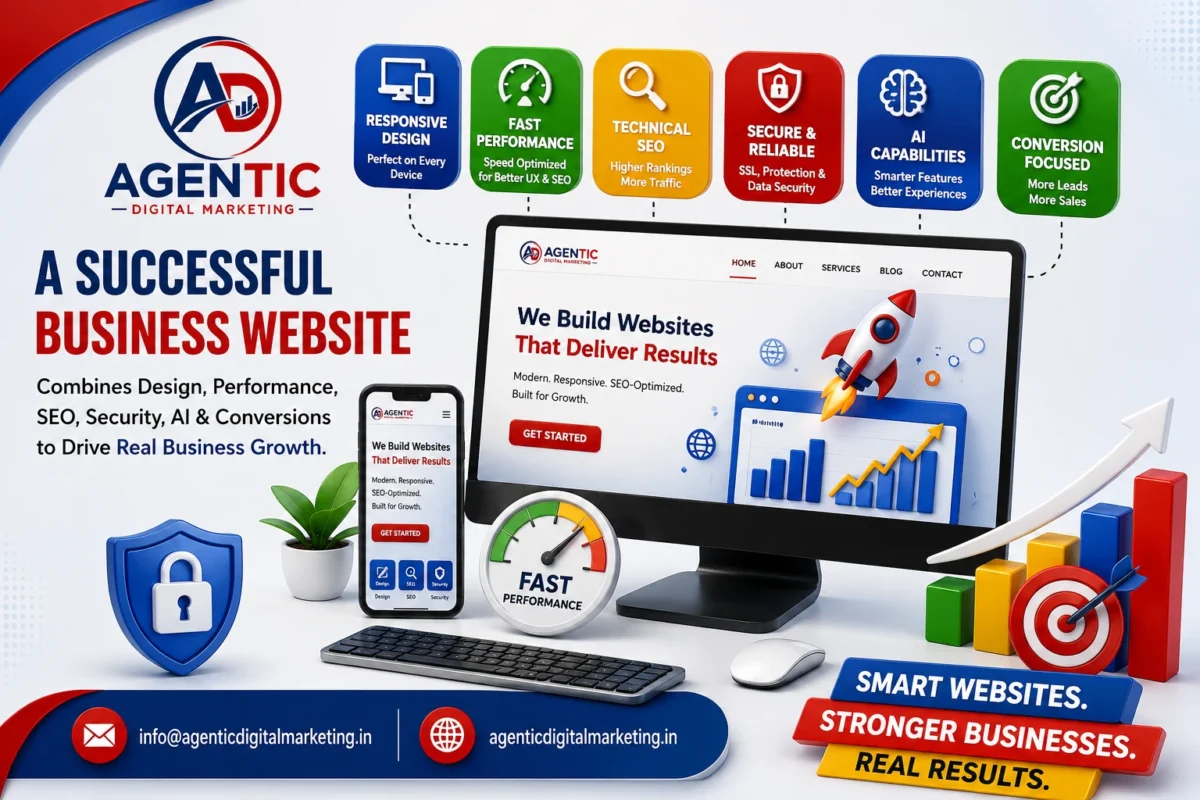
A visually attractive website alone is no longer enough. Modern websites must combine responsive design, technical SEO, Core Web Vitals optimisation, security, AI-powered functionality, and conversion-focused user experiences to remain competitive.
Essential Features at a Glance
- Mobile-responsive design
- Fast loading speed
- Excellent Core Web Vitals
- SSL security
- SEO-friendly architecture
- Conversion Rate Optimisation (CRO)
- AI-powered customer experiences
- Accessibility compliance
- Secure hosting
- Scalable technology stack
Businesses investing in Professional Website Development gain a competitive advantage by creating websites that not only look impressive but also perform exceptionally across search engines, AI-powered search experiences, and customer journeys.
For businesses planning a future-ready website, explore our AI-driven Website Development Company services:
https://agenticdigitalmarketing.in/services/website-development-company/
Mobile Responsive Design
Why It Matters
More than half of global website traffic now comes from smartphones and tablets. Visitors expect websites to function flawlessly regardless of screen size.
A responsive website automatically adjusts layouts, images, navigation, and content to deliver a seamless browsing experience across:
- Smartphones
- Tablets
- Laptops
- Desktop computers
- Large displays
Responsive design is also a confirmed ranking factor because Google primarily indexes the mobile version of a website.
Benefits of Responsive Design
- Better user experience
- Higher Google rankings
- Lower bounce rates
- Increased enquiries
- Better ecommerce conversions
- Easier website maintenance
- Consistent branding across devices
Best Practices
- Flexible layouts
- Responsive typography
- Mobile-friendly navigation
- Clickable buttons
- Optimised images
- Touch-friendly forms
Fast Loading Speed
Why Website Speed Matters
Website visitors expect pages to load almost instantly.
Even a delay of just a few seconds can result in:
- Lost visitors
- Lower conversions
- Reduced customer satisfaction
- Poor search rankings
Website speed directly influences user behaviour and overall business performance.
Factors Affecting Speed
- Large image files
- Poor-quality hosting
- Excessive plugins
- Unoptimised JavaScript
- Render-blocking CSS
- Slow databases
- No browser caching
Speed Optimisation Techniques
Professional developers improve loading times using:
- Image compression
- WebP image format
- Lazy loading
- Browser caching
- CSS & JavaScript minification
- CDN integration
- Database optimisation
- High-performance cloud hosting
Fast websites improve customer satisfaction while also supporting SEO performance.
Core Web Vitals
What Are Core Web Vitals?
Core Web Vitals are Google’s performance metrics used to measure real-world user experience.
The three primary metrics include:
| Metric | Measures |
|---|---|
| Largest Contentful Paint (LCP) | Loading performance |
| Interaction to Next Paint (INP) | User interaction responsiveness |
| Cumulative Layout Shift (CLS) | Visual stability |
Why They Matter
Good Core Web Vitals help:
- Improve SEO
- Enhance usability
- Increase conversions
- Reduce abandonment
- Improve customer satisfaction
How Developers Optimise Core Web Vitals
Professional website development focuses on:
- Optimised server response
- Efficient coding
- Optimised fonts
- Compressed images
- Deferred JavaScript
- Proper caching
- Reduced layout shifts
These technical improvements often lead to measurable improvements in both rankings and user engagement.
SSL Security
What Is an SSL Certificate?
An SSL Certificate encrypts communication between website visitors and the server.
Instead of:
http://
users see:
https://
This encryption protects sensitive information including:
- Login credentials
- Customer enquiries
- Payment details
- Personal information
Benefits
- Improved customer trust
- Better Google rankings
- Secure transactions
- Data protection
- Reduced cyber risks
Modern browsers also warn users when websites lack SSL protection, making HTTPS an essential requirement rather than an optional feature.
SEO-Friendly Website Architecture
Why Architecture Matters
Website architecture determines how pages are organised, connected, and discovered by both users and search engines.
Poor architecture often results in:
- Crawl issues
- Duplicate pages
- Weak internal linking
- Slow indexing
- Poor user experience
Characteristics of SEO-Friendly Architecture
- Logical navigation
- Clean URL structure
- XML sitemap
- Robots.txt configuration
- Breadcrumb navigation
- Internal linking
- Canonical tags
- Optimised heading hierarchy
A well-planned architecture helps search engines understand your website while making navigation easier for visitors.
Businesses looking to maximise search visibility should invest in SEO-Friendly Website Development, where technical SEO is integrated into the build process rather than added after launch.
Conversion Rate Optimisation (CRO)
What Is CRO?
Conversion Rate Optimisation is the process of increasing the percentage of website visitors who complete a desired action.
Examples include:
- Contact enquiries
- Product purchases
- Appointment bookings
- Newsletter sign-ups
- Phone calls
- Quote requests
Elements That Improve Conversion Rates
Professional websites include strategically placed:
- Call-to-action buttons
- Contact forms
- Testimonials
- Customer reviews
- Trust badges
- Case studies
- FAQs
- Live chat
- Sticky enquiry buttons
Why CRO Matters
Increasing conversion rates often delivers greater business value than simply increasing website traffic.
For example:
- 1,000 visitors with a 2% conversion rate = 20 enquiries
- 1,000 visitors with a 5% conversion rate = 50 enquiries
Small improvements can significantly increase revenue without increasing advertising spend.
AI-Powered Features
Artificial Intelligence is rapidly changing how websites interact with users.
Modern websites increasingly include AI-powered capabilities that improve customer experience while reducing manual work.
AI Chatbots
AI chatbots provide instant assistance by answering frequently asked questions, qualifying leads, booking appointments, and guiding visitors to relevant information—available 24/7 without human intervention.
Smart Search
Predictive search helps users find products, services, or content more quickly by offering intelligent suggestions as they type.
Benefits include:
- Faster navigation
- Improved product discovery
- Higher engagement
- Increased sales
Personalised Experiences
AI analyses visitor behaviour to deliver personalised content, recommendations, and offers based on user preferences and browsing history.
Examples include:
- Recommended products
- Suggested articles
- Personalised landing pages
- Dynamic offers
Workflow Automation
AI integrations can automate repetitive business processes such as:
- Lead qualification
- Appointment scheduling
- Email follow-ups
- CRM updates
- Customer support routing
This improves operational efficiency while enhancing customer satisfaction.
AI Content Assistance
Businesses can streamline content creation with AI-assisted tools that help generate:
- Product descriptions
- Blog outlines
- FAQs
- Meta descriptions
- Email campaigns
Human review remains essential to ensure accuracy, originality, and alignment with brand voice.
Accessibility & Inclusivity
Modern websites should also support users with diverse accessibility needs by following recognised standards.
Important accessibility features include:
- Keyboard navigation
- Image alternative text
- High colour contrast
- Clear typography
- Screen reader compatibility
- Accessible forms
Accessible websites improve usability for everyone while helping businesses meet legal and ethical expectations.
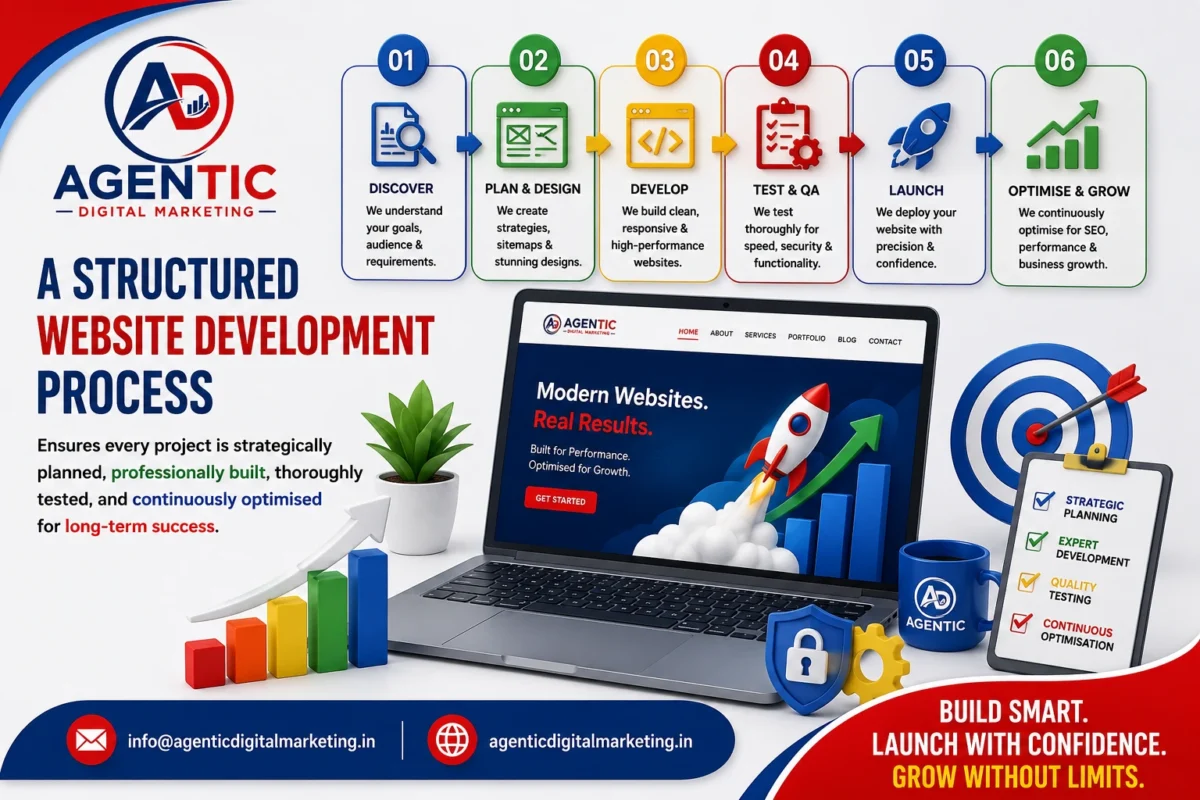
Website Development Process
Quick Answer (Featured Snippet):
A professional website development process follows a structured approach that includes discovery, planning, UI/UX design, development, testing, launch, and ongoing maintenance. This ensures the final website aligns with business goals, delivers an excellent user experience, and supports long-term growth.
Key Takeaway
Following a proven development process reduces project risks, improves collaboration, and results in a website that is secure, scalable, SEO-friendly, and built for conversions.
Typical Website Development Workflow
- Discovery
- Planning
- UI/UX Design
- Website Development
- Testing & Quality Assurance
- Website Launch
- Ongoing Maintenance & Optimisation
Discovery
Every successful website begins with understanding the business.
During discovery, developers and strategists gather information about:
- Business objectives
- Target audience
- Competitor landscape
- Customer journey
- Brand identity
- Functional requirements
- SEO goals
- Conversion objectives
This phase lays the strategic foundation for the entire project.
Planning
The planning stage transforms business requirements into a clear project roadmap.
Typical deliverables include:
- Website architecture
- Navigation structure
- Content hierarchy
- Technical specifications
- Feature prioritisation
- Project timeline
- Resource allocation
A well-planned information architecture improves both user experience and search engine crawlability.
UI/UX Design
Design is about more than aesthetics—it shapes how users interact with your website.
UI Design Focuses On
- Visual branding
- Typography
- Colour schemes
- Buttons
- Icons
- Layout consistency
UX Design Focuses On
- User journeys
- Ease of navigation
- Information accessibility
- Reduced friction
- Faster task completion
- Higher engagement
Interactive wireframes and prototypes are often created before development begins, allowing stakeholders to review and refine the experience.
Website Development
Once designs are approved, developers begin building the website using the selected technology stack.
Depending on project requirements, this may involve:
- WordPress development
- Shopify development
- WooCommerce integration
- Custom PHP development
- React front-end applications
- Node.js backend services
- Database configuration
- Third-party API integrations
Throughout development, attention is given to:
- Responsive layouts
- Performance optimisation
- Security best practices
- Technical SEO
- Clean, maintainable code
Testing & Quality Assurance
Before launch, every component should be thoroughly tested.
A comprehensive QA checklist includes:
- Cross-browser compatibility
- Mobile responsiveness
- Form functionality
- Broken link detection
- Speed testing
- Security validation
- Accessibility review
- SEO audit
- Schema validation
- Performance benchmarking
Testing helps identify and resolve issues before they impact users.
Website Launch
Launching a website involves much more than publishing files.
A professional launch process typically includes:
- Domain configuration
- SSL activation
- Hosting optimisation
- XML sitemap submission
- Google Analytics setup
- Google Search Console verification
- Redirect implementation
- Backup creation
- Final performance checks
A structured launch minimises downtime and ensures search engines can index the new website efficiently.
Businesses looking for an experienced Website Development Agency should ensure post-launch SEO, analytics, and monitoring are included as part of the service—not treated as optional extras.
Ongoing Maintenance
A website should continue evolving after launch.
Regular maintenance includes:
- Software updates
- Plugin updates
- Security patches
- Performance optimisation
- Content improvements
- SEO enhancements
- Backup verification
- Bug fixes
- Analytics reporting
Continuous optimisation keeps the website secure, competitive, and aligned with changing user expectations and search engine algorithms.
Website Development Lifecycle Checklist
| Phase | Primary Goal |
|---|---|
| Discovery | Understand business objectives |
| Planning | Create project roadmap |
| UI/UX Design | Design intuitive user experiences |
| Development | Build website functionality |
| Testing | Ensure quality and performance |
| Launch | Deploy website successfully |
| Maintenance | Support long-term growth |
WordPress vs Shopify vs Custom Website Development
Quick Answer (Featured Snippet):
WordPress is the best choice for content-rich and SEO-focused websites, Shopify is ideal for businesses that want an easy-to-manage ecommerce store, while custom website development is best for organisations requiring advanced functionality, enterprise integrations, and maximum scalability.
Key Takeaway
There is no single “best” platform for every business. The right choice depends on your goals, budget, growth plans, technical requirements, and the level of flexibility you need over the long term.
Platform Overview
| Platform | Best For |
|---|---|
| WordPress | Business websites, blogs, service companies, WooCommerce stores |
| Shopify | Ecommerce businesses, D2C brands, fashion stores, retail |
| Custom Development | Enterprises, SaaS, portals, marketplaces, complex workflows |
Choosing the right platform from the beginning reduces future migration costs, improves website performance, and creates a stronger foundation for SEO and digital marketing.
Businesses unsure which platform fits their needs should consult an experienced AI Website Development team before starting development:
WordPress Website Development
WordPress is the world’s most widely used content management system because it offers flexibility, scalability, and an extensive ecosystem of themes and plugins.
Advantages
- Easy content management
- Excellent SEO capabilities
- Thousands of plugins
- Highly customisable
- WooCommerce support
- Blogging functionality
- Cost-effective development
- Large developer community
Best For
- Small businesses
- Service companies
- Agencies
- Educational institutions
- Healthcare organisations
- Manufacturing companies
- Corporate websites
- SEO-driven businesses
Potential Considerations
- Requires regular updates
- Plugin quality varies
- Performance depends on optimisation
- Security requires ongoing maintenance
When professionally developed and maintained, WordPress remains one of the most powerful platforms for businesses focused on long-term organic growth.
Shopify Website Development
Shopify is a hosted ecommerce platform designed specifically for selling products online.
It provides a managed environment where merchants can focus on growing their business instead of managing servers and technical infrastructure.
Advantages
- Quick deployment
- Secure hosting included
- Easy product management
- Integrated payment options
- Large app marketplace
- Excellent inventory management
- Reliable uptime
- Beginner-friendly interface
Best For
- Fashion brands
- Retail businesses
- Beauty brands
- Electronics stores
- Lifestyle products
- Direct-to-consumer brands
- Subscription businesses
Potential Considerations
- Monthly subscription fees
- Limited backend customisation
- Transaction fees in some scenarios
- Advanced custom features may require specialist development
For ecommerce businesses seeking rapid deployment and straightforward management, Shopify is often an excellent choice.
Custom Website Development
Custom development involves building a website or web application specifically around business requirements instead of relying on pre-built templates or platforms.
Every feature is designed to support unique workflows and business objectives.
Advantages
- Unlimited flexibility
- Enterprise scalability
- Custom integrations
- High performance
- Advanced security
- Tailored user experience
- Bespoke functionality
- Greater control over architecture
Best For
- SaaS companies
- Large enterprises
- Online marketplaces
- Customer portals
- Booking platforms
- Membership systems
- ERP integrations
- CRM integrations
Potential Considerations
- Higher initial investment
- Longer development timeline
- Ongoing technical support required
- More detailed planning process
For organisations with complex operational requirements, custom development often delivers the greatest long-term value.
WordPress vs Shopify vs Custom Website Comparison
| Feature | WordPress | Shopify | Custom Development |
|---|---|---|---|
| Best Use Case | Business websites & blogs | Ecommerce stores | Enterprise solutions |
| SEO | Excellent | Very Good | Excellent |
| Initial Cost | Moderate | Low to Moderate | High |
| Monthly Costs | Hosting & maintenance | Subscription | Hosting & maintenance |
| Flexibility | Very High | Medium | Unlimited |
| Scalability | High | High | Excellent |
| Content Management | Excellent | Good | Custom |
| Ecommerce Features | WooCommerce | Built-in | Fully Custom |
| Third-Party Integrations | Extensive | Extensive | Unlimited |
| Performance | Excellent with optimisation | Excellent | Excellent |
| AI Integrations | Easy | Easy | Fully Custom |
| Maintenance | Required | Minimal | Managed by developers |
Which Platform Is Best for SEO?
Quick Answer (Featured Snippet):
WordPress generally provides the greatest SEO flexibility because it allows complete control over technical optimisation, content structure, schema markup, and internal linking. Shopify also performs well for ecommerce SEO, while custom websites offer unlimited optimisation when developed correctly.
WordPress SEO Strengths
- Complete metadata control
- Custom URL structures
- Advanced schema implementation
- Strong blogging capabilities
- Internal linking flexibility
- Wide range of SEO plugins
- Easy content optimisation
Shopify SEO Strengths
- Clean website architecture
- Fast hosting
- Secure infrastructure
- Mobile-friendly themes
- Product-focused optimisation
Custom Website SEO Strengths
- Tailored technical SEO
- Lightweight code
- Optimised Core Web Vitals
- Fully customised structured data
- Maximum crawl efficiency
For businesses investing heavily in search visibility, technical SEO should be incorporated during development rather than after launch.
Which Platform Is More Cost-Effective?
Costs vary depending on project complexity, integrations, content requirements, and long-term maintenance.
WordPress
Ideal for businesses seeking flexibility while keeping ongoing costs relatively manageable.
Typical costs include:
- Hosting
- Premium plugins
- Maintenance
- Security
- Backups
Shopify
Monthly subscription pricing simplifies budgeting because hosting, security, and platform updates are included.
Additional costs may include:
- Premium themes
- Paid apps
- Transaction fees
- Custom development
Custom Development
Custom websites require a higher initial investment but often reduce operational limitations as businesses scale.
Suitable for organisations where efficiency, automation, and integration deliver significant business value.
Which Platform Scales Better?
WordPress
Excellent for:
- Growing service businesses
- Corporate websites
- Content marketing
- Multi-location companies
Shopify
Excellent for:
- High-volume online stores
- International selling
- Omnichannel commerce
- Product catalogue expansion
Custom Development
Ideal for:
- Millions of users
- Enterprise workflows
- Complex databases
- SaaS products
- Marketplace platforms
AI Integration Capabilities
Modern websites increasingly integrate Artificial Intelligence regardless of platform.
Examples include:
- AI chatbots
- Smart recommendations
- Personalised content
- Automated lead qualification
- Predictive product search
- AI-powered customer support
- Marketing automation
- CRM synchronisation
Both WordPress and Shopify support a wide range of AI applications through plugins, apps, and APIs, while custom development enables fully bespoke AI-powered experiences tailored to specific business needs.
Recommended Platform by Business Type
| Business Type | Recommended Platform |
|---|---|
| Local Business | WordPress |
| Digital Agency | WordPress |
| Healthcare Clinic | WordPress |
| Educational Institution | WordPress |
| Manufacturing Company | WordPress or Custom |
| Restaurant | WordPress |
| Real Estate Company | WordPress |
| Startup | WordPress or Custom |
| Ecommerce Brand | Shopify |
| Fashion Brand | Shopify |
| Large Enterprise | Custom Development |
| SaaS Business | Custom Development |
Decision Checklist
Before selecting a platform, ask the following questions:
- What is the primary purpose of the website?
- Will you sell products online?
- How important is SEO to your business?
- Do you need custom functionality?
- What is your long-term growth strategy?
- What is your development budget?
- Who will manage the website after launch?
- Will you require CRM, ERP, or third-party integrations?
- Do you plan to expand internationally?
- How important are AI-powered features?
Answering these questions early helps avoid unnecessary redevelopment and ensures your website continues to support business growth for years to come.
How to Choose the Best Website Development Company
Quick Answer (Featured Snippet):
The best website development company combines technical expertise, SEO knowledge, UI/UX design, transparent communication, proven results, ongoing support, and a scalable development process. Choose a partner that understands your business goals rather than one that simply builds websites.
Key Takeaway
Your website is a long-term business investment. Selecting the right development partner can improve lead generation, search visibility, user experience, and return on investment for years to come.
1. Review Their Portfolio
A strong portfolio demonstrates experience across industries and technologies.
Look for projects involving:
- Business websites
- Ecommerce stores
- WordPress websites
- Shopify websites
- Custom web applications
- Landing pages
- Website redesign projects
Ask whether the examples include measurable outcomes such as increased traffic, improved conversion rates, or better website performance.
2. Assess Their SEO Expertise
Website development and SEO should work together from day one.
Ask whether the company includes:
- Technical SEO
- SEO-friendly URL structures
- Schema Markup
- XML sitemaps
- Core Web Vitals optimisation
- Mobile responsiveness
- Image optimisation
- Internal linking strategy
Building SEO into the development process reduces future optimisation costs.
3. Evaluate Their Technology Stack
The agency should recommend the platform that best fits your business—not simply the one they prefer.
Common technologies include:
- WordPress
- Shopify
- WooCommerce
- HTML5
- CSS3
- JavaScript
- PHP
- React
- Node.js
- MySQL
A flexible technology stack helps your website scale as your business grows.
4. Understand Their Design Process
A professional agency should have a structured approach covering:
- Discovery workshops
- Wireframing
- UI design
- UX testing
- Responsive design
- Development
- Quality assurance
- Launch planning
This process reduces project risk and improves outcomes.
5. Check Reviews and Testimonials
Look for consistent feedback regarding:
- Communication
- Timely delivery
- Technical knowledge
- Post-launch support
- Problem-solving
- Overall client satisfaction
Verified reviews and case studies provide additional confidence.
6. Ask About Website Performance
A modern website should prioritise:
- Fast loading times
- Excellent Core Web Vitals
- Secure hosting
- CDN integration
- Browser caching
- Optimised code
Performance directly affects user experience and search rankings.
7. Confirm Ongoing Support
A website requires regular maintenance after launch.
Ask whether the agency provides:
- Security updates
- Plugin updates
- Backups
- Performance monitoring
- Bug fixes
- Content support
- SEO improvements
8. Consider Scalability
Choose a partner that can support future growth through:
- New landing pages
- Ecommerce expansion
- CRM integrations
- AI-powered features
- Marketing automation
- Multi-location websites
- International SEO
9. Compare Value, Not Just Price
The lowest quote may result in higher long-term costs if the website requires redevelopment, performs poorly, or lacks SEO foundations.
Focus on total business value rather than initial development cost alone.
Frequently Asked Questions
1. What does a website development company do?
A website development company plans, designs, develops, launches, and maintains websites while improving performance, SEO, security, and user experience.
2. How much does a business website cost?
Costs vary based on website size, functionality, platform, design complexity, and integrations. Small business websites generally cost less than enterprise or custom web applications.
3. How long does website development take?
A simple business website may take several weeks, while larger ecommerce or custom projects can take several months depending on scope and feedback cycles.
4. Which platform is best: WordPress or Shopify?
WordPress is ideal for content-rich and service-based websites, while Shopify is an excellent choice for dedicated ecommerce businesses seeking streamlined store management.
5. Is SEO included in website development?
Technical SEO should be incorporated during development, including clean code, responsive layouts, structured data, internal linking, and fast loading speeds.
6. Why is responsive design important?
Responsive design ensures your website functions well across mobile phones, tablets, and desktops, improving both user experience and search visibility.
7. What is AI-powered website development?
AI-powered website development integrates features such as intelligent chatbots, personalised recommendations, predictive search, workflow automation, and AI-assisted content experiences.
8. Do I need website maintenance after launch?
Yes. Regular maintenance helps keep your website secure, fast, compatible with software updates, and aligned with changing business needs.
9. What is the difference between web design and web development?
Web design focuses on visual appearance and user experience, while web development builds the functionality, database, integrations, and technical infrastructure.
10. Can an existing website be redesigned?
Yes. A redesign can modernise branding, improve usability, strengthen SEO, increase performance, and support new business objectives.
11. Why are Core Web Vitals important?
Core Web Vitals measure loading speed, responsiveness, and visual stability, helping improve user satisfaction and search performance.
12. How do I choose the right website development company?
Review portfolios, technical expertise, SEO capabilities, communication processes, support services, scalability, and client feedback before making a decision.
Call to Action
Ready to Build a High-Performing Business Website?
Your website should do more than look professional—it should help your business attract qualified visitors, generate leads, increase conversions, and support long-term growth.
At Agentic Digital Marketing Agency, we build AI-powered, SEO-friendly websites tailored to your business goals. Whether you need a WordPress website, Shopify store, ecommerce solution, landing page, corporate website, or a complete website redesign, our team combines modern design, technical expertise, and conversion-focused strategy to deliver measurable results.
Book your free website consultation today and discover how a professionally developed website can become one of your most valuable digital assets.
🚀 Ready to Grow Your Business Online?
Agentic Digital Marketing Agency helps businesses with SEO, Google Ads, Meta Ads, Website Development, Local SEO and Lead Generation.
